
05.09.2025 18:46
Decoding India’s Asia Cup Dilemma: Searching for Winning Momentum
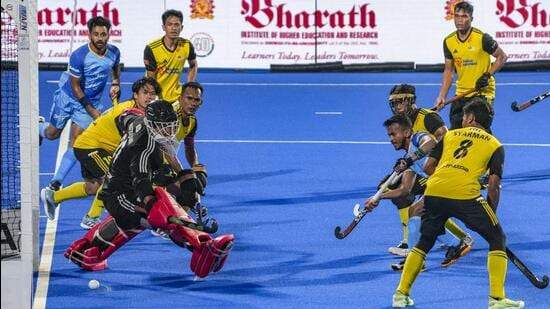
Rajgir: For the past four years, summers have felt more like a vibrant spring for India, brimming with achievements in the Olympics, continental tournaments, and the Pro League podium finishes.
This year, however, India led by Harmanpreet Singh is facing intense challenges. Since resuming the Pro League in June, the team, ranked eighth globally, has struggled to maintain its competitive edge compared to previous seasons.
They suffered through seven consecutive losses in the Pro League, narrowly avoiding relegation with an eighth-place finish out of nine teams. Additionally, they lost three out of four friendly matches against Australia in Perth last month. Although still undefeated in the Asia Cup, India—a team that has medaled in the last two Olympics—finds itself struggling against teams that haven’t qualified for the last three Games, save for Japan, hosts of Tokyo.
Former Indian women’s team coach Neil Hawgood, speaking from Perth, expressed his disappointment with India’s recent performance, noting their slow pace and disorganized defense. He speculates that this might be a result of intense training in preparation for the Asia Cup.
In Rajgir, India faced challenges defeating China and Japan. Excluding their 15-0 victory against world No.88 Kazakhstan, the team nearly lost to defending champions South Korea before rallying for a draw.
FIH Master Coach Siegfried Aikman, now coaching Bangladesh’s junior team, observed that India faces recurring issues in defense and relies heavily on Harmanpreet. He pointed out that both China and Japan, ranked 22 and 18 respectively, were narrowly beaten by India.
Harmanpreet’s drag-flicking prowess was crucial in their narrow victories, but the rest of India’s penalty corner team lacks the same caliber. Despite efforts from players like Amit Rohidas and Sanjay, they have been unable to match Harmanpreet’s impact.
Aikman also noted that India’s extensive preparation, which included practice matches, the Pro League, and the Olympics, should have made them dominant in this tournament. However, this has not been the case.
During penalty corners, India’s defense allowed China to convert three out of five chances—an unusually high conversion rate for such matches. Discipline on the field has also been a concern, with India receiving multiple cards in games against China and Japan.
After initial struggles, India found its stride against Malaysia on Thursday, showcasing their fluidity, better passing, strong defense, and conversion skills reminiscent of their dominance in previous seasons.
Belgium head coach Shane McLeod noted that while India performed well in Paris, they now face teams playing with little to lose. He emphasized the importance of India completing their Asia Cup journey with confidence.
Currently leading in the Super 4s, India’s upcoming match against China on Saturday will determine their place in Sunday’s final. Chief coach Fulton hopes India can maintain the momentum from their victory over Malaysia to secure World Cup qualification, making this summer another period of blossoming success.