
11.08.2025 19:29
Mumbai’s Prodigy: The New Architect of Indian Cricket Leadership
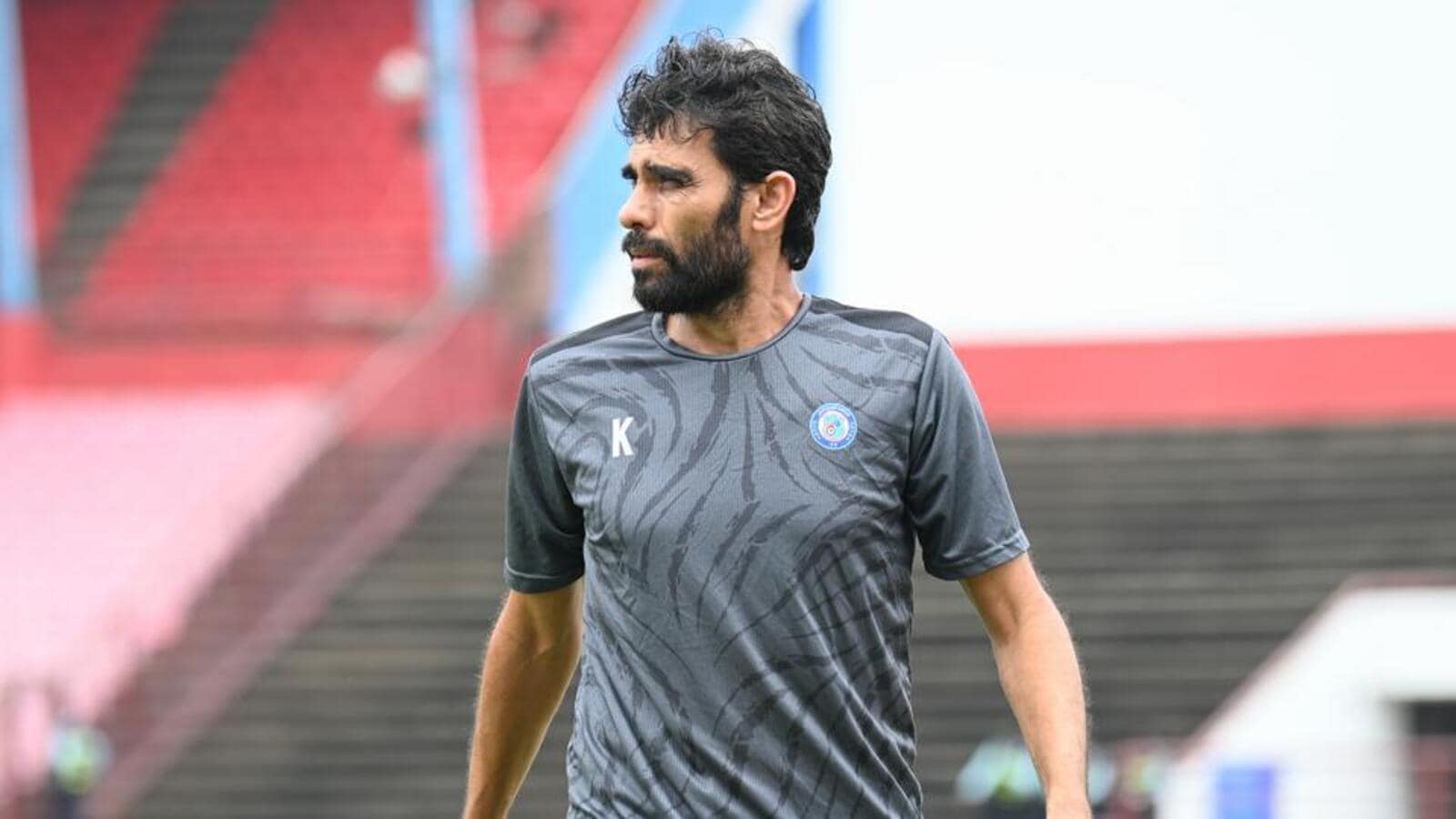
Mumbai: In the early 2000s, in a residential building on Mira Road, Henry Menezes found himself waiting for Khalid Jamil. Back then, this Mumbai suburb was not as bustling as it is today, but it was here that Jamil made his home.
Henry Menezes, a former India goalkeeper who once played for and later managed the now-defunct Mahindra United, had the task of persuading Jamil to sign the contract with the club.
“Khalid was not easy to get a hold of,” Menezes reminisced to HT. “Once he finally got home, we escorted him to our office. I handed him a pen to sign, and then he said, ‘ye pen ka colour accha nahi hai, dusra hai kya? (the pen’s color is not good, do you have another one?)’
At the time, Jamil was with Air India and was averse to change. His loyalty was deeply rooted, making it a three-hour process for the Mahindra United team management to get his signature.
Recently on a Friday, Jamil embraced another major change. The 48-year-old with 40 India caps is now stepping in as the national coach, becoming the first Indian since 2012 to be named the chief coach of the men’s national team.
Though his club football career was based in Mumbai, Jamil’s journey began over 2,500 kilometers away in Kuwait. After fleeing Kuwait during the Gulf War in 1990, Jamil’s family resettled in Mumbai, a city where he continued to nurture his love for football.
He played for the Rashtriya Chemicals and Fertilizers (RCF) youth team and was soon brought onto Air India’s team, mentored by Dronacharya awardee Bimal Ghosh.
“He had a sharp mind, picking things up quickly and carrying that same sharpness into his coaching,” Ghosh remarked. “Jamil was driven, dedicated, and had an intense passion for the game.”
On the field, Jamil was fiercely competitive. On one occasion, after a poor refereeing decision, he angrily kicked a ball that smashed into a chair.
“He completely broke the chair,” Ghosh laughed. “I warned him he’d be out if he ever did that again. He apologized, and that was the only time he reacted so aggressively on the pitch.”
As a coach, Jamil is vocal and commanding on the touchline but remains calm and soft-spoken off the field.
“We used to joke with him, ‘ground main tu sher hota hai, bahaar billi hota hai.’ (you’re a lion on the field but a cat outside). He’d just grin, lower his head, and walk away,” Menezes chuckled.
Knee injuries significantly limited his playing career, but by 2007, Menezes had brought Jamil in to captain the newly-formed Mumbai FC team. It was there that Jamil first ventured into coaching.
“Our head coach David Booth saw potential in Jamil and put him in charge of the U-19 team while he was still playing in the senior team,” Menezes explained. “Under his guidance, the junior team excelled. When David left, Jamil naturally became the senior team coach.”
During a seven-season tenure as the Mumbai FC coach, Jamil faced many challenges, which Menezes called “being put in the furnace.” When Jamil was dismissed in 2016, it was a defining moment in his life.
After a football career rooted in Mumbai, the departure was tough.
“Leaving Mumbai was heart-wrenching for him, as it was his home,” said Menezes. “But having seen hardship from Kuwait and making a life in Mumbai, Jamil persevered through every setback.”
Just a year after departing from Mumbai FC, he led Aizawl FC to a remarkable I-League title, with his coaching prowess growing further. In the 2020-21 season, he became the first Indian coach to lead an Indian Super League (ISL) team – NorthEast United – to the semi-finals, a feat he replicated with Jamshedpur FC this year.
Jamil’s success is largely attributed to his ability to unite foreign and Indian players seamlessly.
“He took the time to understand their mindset and earn their trust,” Menezes explained. “Foreign players can be challenging to manage, but Jamil excelled as a man-manager.”
Jamil’s teams consistently outperformed expectations. Now, he aims to revitalize a national team that has fallen to 133rd in the world rankings, hoping to extract the best from India’s national players.